ArachnOS is an OSINT platform for investigation management. It gathers the material, maps how people, organizations, events, and evidence connect, and records where every fact came from, so any finding traces back to its source.
ArachnOS grades the evidence, keeps a permanent record of who changed what, and leaves the ruling to a human.
Every fact can carry its sources, each rated two ways: how reliable the source is, and how believable the claim is. It also tracks whether a second source confirms something or merely repeats the first.
The software suggests a confidence level from the evidence; the analyst sets it. Anything with an open question against its name is flagged on the map until someone rules.
An unalterable log of every change: who made it (person or AI), when, and exactly what. Snapshots let you save the whole map and compare any two points in time.
The software compares faces only against evidence you have gathered, and it collects no usage data on anyone. Both limits are permanent.
Every surface reads and writes the same audited graph. The screens below use an invented network. ArachnOS is domain-agnostic and doesn't know or care what your subject matter is.
Color and size the map by what things are, by how connected they are, or by the clusters it finds on its own. Focus on one person and widen the circle a step at a time, filter the view, or find the path between two people, with a one-click filter for anything still unconfirmed.

Introduced to Meridian Group through J. Halloran in spring. Present at Coastal Forum, seated with A. Reyes. A filing lists a payment routed via Delta Holdings LLC. Funding link still suspected, awaiting a second independent source. Follow up on the Northgate Venue booking.
Mentions link both ways in time. Create a node next month for someone written about today, and the older mention links itself, without overwriting your text.
Every entity opens into its complete file. Overview, connections, evidence, sources, contact details, notes, and timeline. Narrative links entities as you mention them, and the links keep working backwards in time.


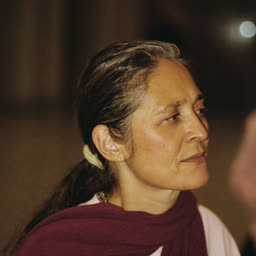

The software assumes nothing. A person confirms every identification.
| Put a name to the group | A. Reyes |
| Merge two groups | 14 + 27 |
| Create a new entry | + new person |
| Record "were together" | photo as proof |
You put the names to faces. The software scans each photo you add and groups the same face wherever it appears, down to single-photo faces. Set aside the stranger in a crowd shot; if that face turns up in new evidence, it returns to the queue flagged as reappeared.
| Item | Source | Fingerprint | Re-check |
|---|---|---|---|
| leadership-page.html | saved web page | 3f9a…c012 | Match |
| forum-0417.jpg | event photo | a71d…8ef4 | Match |
| public-meeting.mp4 | video link | c40b…19aa | Match |
| delta-filing.pdf | scanned filing | 88e2…4d7c | Match |
| old-bio.html | dead link, recovered | 1b6f…a290 | Archive |
Keep evidence you can defend. Every file gets a digital fingerprint the moment it arrives; re-check it later and you'll know if it was ever altered or swapped. Paste a web address to capture the page; when a page has been taken down, ArachnOS finds an archived copy. Search everything at once: names, notes, sources, transcripts, and text read out of scanned documents.
| Evidence | T1 coord. | T2 coinc. | T3 vendor |
|---|---|---|---|
| Shared registered agent | ++ | − | + |
| Co-timed payments | ++ | −− | n/a |
| Same venue, three events | + | + | − |
| No contract on file | n/a | n/a | −− |
| Survives | T1 ✓ | T2 | T3 |
Weigh several explanations against the same evidence. A structured grid built on a standard intelligence-analysis method shows which explanation survives the evidence. The full case report leads with key findings, admits the gaps in what is known, profiles the people involved, and exports to PDF with your judgment sections preserved.
Gather the material, rule on it, and produce the report inside one audited system, scoped to whichever investigation is active.
An interactive map of people, organizations, events, places, and documents. Color and size it by type, by how connected things are, or by the clusters it finds on its own; focus on one person, or find the path between two.
A digital fingerprint on every file, re-checkable on demand. Save a web page and it pulls out the people and accounts; dead links are recovered from an archive; scanned documents are read and made searchable.
Faces are grouped wherever they appear, and you put the names to them. Video and audio are transcribed and time-stamped, and anything found in a frame links straight back to the moment in the footage.
Park the threads you can't chase today, then triage them from open to exploring to promoted to cold. Run several cases across one shared map; when the same person turns up twice, that surfaces on its own.
A structured grid weighs competing explanations against the same evidence, on a standard intelligence-analysis method, so you see which explanation survives.
Formatted PDF reports on a single profile or an entire network: key findings, honest gaps, and supporting evidence. Snapshots save the whole map so you can compare any two points in time.
"Who is connected to whom, and how do we know?" with the discipline to prove the answer. These are capabilities, not causes: ArachnOS is domain-agnostic.
People, organizations, places, events, and documents accumulating faster than notes can hold them.
Mapping the officers, donors, vendors, and affiliations around an organization, with every claim traced to a source.
Who appears at which events, who engages with whose posts, which venues keep recurring across time.
Tracking publications, posts, narratives, and the people behind them, across time and across sources.
Understanding coalitions, memberships, and relationships from public material, with sourcing on every link.
ArachnOS does not know or care what your subject matter is. The same map and the same rules of proof apply to whatever you bring.
An invented example, end to end. The software surfaces raw material; the analyst decides what becomes fact.
Start in the right investigation, or open a fresh walled-off web so nothing from another matter can touch it.
Feed the case: saved web pages, event photos, a recorded meeting, a scanned filing. Every item fingerprinted and sourced.
It reads scanned filings into leads, groups the faces in your photos, and transcribes recordings with time stamps.
Work the faces queue, triage the leads, and check the AI's proposals against the sources; confirm or reject each one.
New mentions link automatically, even backwards in time, and shared phone numbers or addresses become clues you can see.
Key findings up front, the gaps named, the map attached, each claim traceable, each change on the record.
Around 44 tools let an AI assistant work a case alongside you: adding and reading entries, saving web pages, attaching sources, answering questions about the network, and filing leads. Every action it takes is logged under its own name and marked a suggestion for you to confirm. It never quietly states a guess as fact.
Two lines are deliberately out of scope, and they stay that way.
The software compares faces only against the evidence you have gathered yourself, never against scraped or third-party face databases. This line does not move.
The software collects no usage data on anyone. What you investigate is your business, and the record of it stays inside the case.

ArachnOS is early and evolving. If you run investigations, accountability research, or influence mapping and want the material, the map, and the sourcing in one system, tell us what you're working on. We'll come back with a real conversation, not a sales sequence.
Talk to us about ArachnOS →